

01 / The challenge
A single project plan. Twelve different realities.
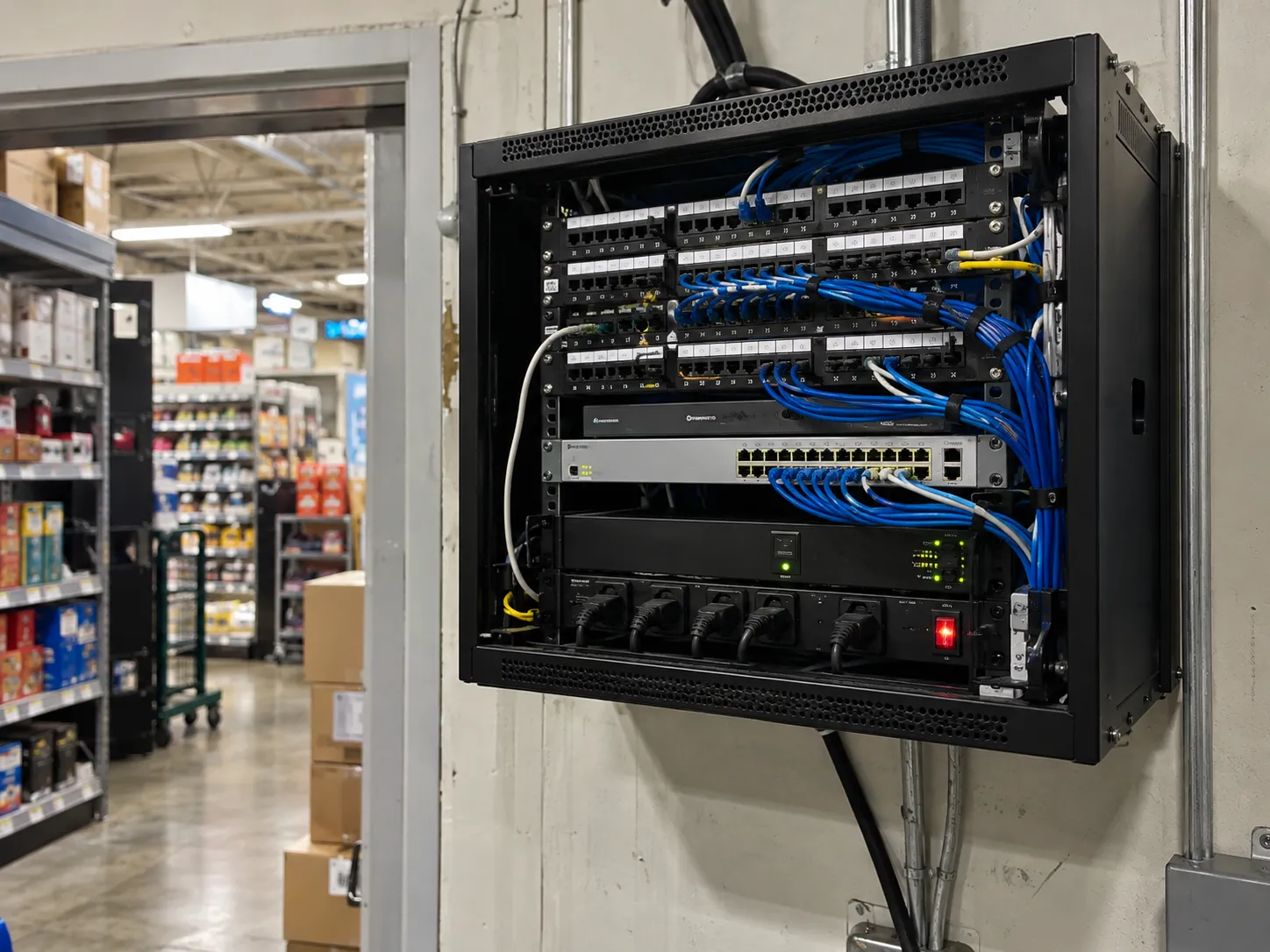
Refreshing retail equipment across multiple cities is more than repeating the same work order. Store layouts, access windows, cabinet labels and equipment deliveries rarely line up perfectly. The real challenge is executing the approved work consistently while stores continue operating.
Locked cabinets, varied store hours and inconsistent physical layouts.
Unconfirmed equipment, labeling mismatches and missing access details.
Field technicians need clear instructions and escalation ownership.
02 / Delivery model
Five stages. One repeatable workflow.
Instead of putting the full technical narrative in one long column, each phase is summarized. Open any step for the underlying delivery detail.
- 01
Site discovery & readiness
Confirm contacts, access, approved work windows, inventory and site-specific dependencies before scheduling.
Read technical detail +−
The coordinator builds a readiness matrix for each location: access instructions, ID requirements, device and asset identifiers, patching references, time windows and remote support contacts. Any missing inventory or unclear access condition is escalated for MSP clarification rather than silently scheduled.
- 02
Dispatch & engineer briefing
Match technicians to site requirements and supply an approved procedure, checklist and escalation contact.
Read technical detail +−
The coordinator confirms equipment availability and site expectations. Engineers are briefed on method-of-procedure boundaries, permitted photographs, stop conditions and the prohibition on unauthorized configuration changes.
- 03
Controlled on-site installation
Verify equipment identities and baseline conditions, then carry out only the authorized physical work.
Read technical detail +−
The technician signs in, documents the existing cabinet state, reconciles labels against the work pack and follows the approved port map. The remote MSP owns configuration and production decisions; discrepancies stop the change until approved.
- 04
Validation & exception handling
Remote engineers validate services; local engineers check authorized physical indicators and report anomalies.
Read technical detail +−
When an uplink appears mislabeled or a device is not as expected, the field engineer does not guess. The MSP reviews the facts and may approve a correction, choose rollback or arrange follow-up, with the decision documented.
- 05
Closeout & structured reporting
Submit a consistent acceptance record rather than a one-line “done” message.
Read technical detail +−
The closeout may contain arrival and departure times, equipment identifiers, permitted before/after evidence, work performed, witnessed checks, approval notes and open exceptions. A consolidated site-by-site view lets the MSP track handover across the illustrative 12 branches.
03 / Roles & responsibilities
Field support extends the MSP. It doesn’t replace it.
In the illustrative model, the MSP retains technical control and the customer relationship. The field partner provides reliable local execution under its instructions.
Technical design · configuration · change approval · rollback decisions · remote service validation
Scheduling · site access · physical installation · authorized observations · evidence and reporting
What if a replacement arrives with the wrong power accessory?
In this hypothetical incident, the technician would pause before installation, document the mismatch and notify the remote MSP lead. If the correct part cannot arrive within the approved window, the visit is recorded as a no-change attendance with a rescheduled next step—rather than risking an unauthorized workaround.
04 / Closeout evidence
Evidence that makes the work traceable.
A proposed project closeout would consolidate site-by-site records in one reviewable format. These are example deliverables, not verified results or performance claims.
05 / What buyers should know
Good field delivery is about control, not just coverage.
For MSPs and systems integrators, a reliable on-site delivery model should fit their existing processes. Clear change boundaries, accessible evidence and accountable exception handling help preserve the provider’s customer relationship while expanding its ability to coordinate work across locations.
What to prepare before commissioning field work
Confirm the list of sites and maintenance windows; what equipment and spares have been delivered; local access and identification rules; tasks that require remote expertise; responsibility for change approval and rollback; photo/data restrictions; and the acceptance evidence required for the work order. Agree on these points before scheduling engineers.
Where a real case study would need verified proof
A future real client case can include approved figures for visits completed, successful changes, repeat attendances, downtime and elapsed delivery times—only after Operations validates source tickets and the customer authorizes publication. This fictional scenario intentionally does not claim those results.
Read the complete case studyFull narrative · for readers who want every detail
A retail technology refresh can look straightforward on a project plan: replace designated equipment, confirm connections, and close the ticket. In practice, the hardest part is often executing the same approved work reliably at every location while stores remain active. This illustrative scenario follows a fictional managed service provider (MSP) coordinating an infrastructure refresh for a retail network through a single on-site field-support workflow. The client and its end customer are unnamed because they are fictional. The purpose is to demonstrate a useful approach to field delivery, not to claim that DacoreIT completed a particular deployment.
Project Profile
A fictional MSP responsible for a chain of 12 small-format retail locations needs local technicians to replace aging network equipment and confirm that new hardware is installed to the MSP’s method of procedure. The stores are in several cities; site layouts, opening hours and access policies differ. The MSP retains ownership of technical design, equipment configuration, change approval and remote service validation. An on-site field partner would manage engineer scheduling, physical work and evidence collection under those instructions. The assumed delivery window is approximately two weeks, with some overnight or early-morning appointments. Those numbers frame this example only; they are not actual DacoreIT delivery metrics.
Why the Project Becomes Complicated
For the MSP, a multi-site assignment is not 12 copies of one ticket. One store keeps its network cabinet in a storeroom; another has it behind a locked office door; a third allows work only before staff arrive. Legacy cables may be inconsistently labeled. Delivery cartons may be addressed to store managers who do not recognize the equipment, and the available power or rack space may differ from the deployment inventory. If the dispatch team ignores these variations, technicians arrive without access or information, changes overrun, and the remote MSP has to manage preventable escalations. In a live commercial environment, the consequences extend beyond engineering hours to customer experience, staff time and trust in the service provider.
What Success Would Need to Mean
The objective would not be merely to send a technician. It would be to give the MSP a predictable execution channel: the right engineer arrives at the right approved time; the work order matches the actual site; equipment identity can be verified; the technician remains connected to the MSP’s remote change lead; and the site is handed back with traceable documentation. Completion should be defined in advance, including acceptable photographs, serial-number records, ticket notes, connectivity checks and exception handling. Any promised outage window or service-level commitment would have to be agreed separately by the contracting parties rather than assumed from this narrative.
Stage One — Discovery and Site Readiness
The coordinator begins by turning the MSP’s change pack into a site-by-site readiness matrix. Each entry records location code, approved contact, access arrangements, required identification, maintenance window, device model, asset tags, patching reference, work duration estimate and remote support bridge details. Equipment receipt is checked before scheduling travel. A site with an incomplete inventory or missing access instructions is flagged rather than quietly placed on the calendar. The MSP reviews exceptions and either supplies clarification or reschedules that visit. This apparently administrative step can be crucial: it separates a technically ready location from one likely to consume engineering hours without producing a completed change.
Stage Two — Dispatch and Pre-Brief
The field coordinator assigns a technician with the appropriate site-access requirements and practical experience with racks, patch leads and hardware identification. The engineer receives a concise method of procedure, a checklist, an escalation contact and a clear prohibition against unapproved configuration changes. The work pack specifies which photographs are permitted, what constitutes a stop condition, and what to do when labels or serial numbers do not match. Before dispatch, the coordinator confirms that the store knows who is attending, that the equipment is on hand, and that remote personnel will be available. The result is a controlled appointment rather than an improvised visit.
Stage Three — Controlled On-Site Execution
At the store, the technician signs in, confirms the designated cabinet or workspace, and reports the starting condition to the MSP. Before touching production equipment, the engineer checks labels against the approved inventory, traces physical connections where authorized and documents the pre-change state. Only then does the technician carry out the specified swap or physical installation while the remote team handles configuration and service decisions. Cables are handled and restored using the approved port map, and any damaged connector, unanticipated powered device or unclear circuit is treated as an exception requiring approval. The engineer must not bypass local safety procedures or improvise a change to make the checklist look complete.
Stage Four — Validation and Escalation
After physical work, the MSP’s remote engineer confirms whether management connectivity, expected interfaces and required services are operating as intended. The on-site technician provides visual indicator checks, authorized local test results and photographs where permitted. Suppose one location reveals a mislabeled uplink. The technician does not guess which cable should be moved. Instead, the team records the discrepancy, compares it with the change plan, and decides whether to perform an approved correction, invoke the agreed rollback, or leave the site safely documented for follow-up. This is an important distinction between task completion and uncontrolled troubleshooting: local action remains tied to remote ownership of the production environment.
Stage Five — Site Closeout and Reporting
A completed visit produces an intelligible record rather than a one-line “done” message. The field report can include arrival and departure time, checked equipment identifiers, before-and-after evidence, work performed, tests witnessed, outstanding issues, approval notes and the identity of the party accepting handover. The coordinator reconciles these records against the master site list and raises any unclosed exception in the MSP’s preferred ticketing system. A final consolidated schedule shows which of the 12 illustrative locations are complete, which remain open, and why. This record would enable the MSP to communicate accurately with its own retail customer without chasing numerous individuals for fragmented updates.
Delivery Complication
Imagine a site where the approved replacement switch has arrived but the packaging contains a different power accessory than the one shown in the build sheet. The field technician stops before installing the equipment, photographs the discrepancy without exposing sensitive credentials, and contacts the designated remote lead. The coordinator checks whether the correct component can be dispatched within the maintenance window. If it cannot, the visit is logged as an authorized no-change attendance, with a revised dependency and owner. The apparent short-term delay protects the quality of the overall program: a documented exception is preferable to an unsafe or unauthorized workaround that introduces a production risk.
Outcome and Evidence
In the fictional example, the program closes with one standardized reporting set for the 12 planned branches. A credible report would separate work orders completed exactly as planned from work orders needing follow-up, and it would show whether each location passed the MSP-defined acceptance checks. It would not automatically claim zero downtime, perfect first-time fix rates or a quantified saving without service logs. The value demonstrated is traceability: a project manager can see how field work was commissioned, executed and accepted. A future real-life case study could add independently verified figures such as scheduled visits, successful changes, repeat attendances, exception categories and elapsed times, provided the client approves their disclosure.
Why This Matters to MSPs and Integrators
For an MSP selling a consistent managed experience to geographically distributed customers, field services should act as an extension of its existing processes—not create a competing control center. The best field operating model respects the MSP’s ownership of the customer relationship, system credentials, change plan and acceptance criteria. It translates remote instructions into visible, local execution while maintaining clear escalation lines. For systems integrators, the same principles apply to staged infrastructure rollouts and refresh projects. Reliable documentation also helps account managers explain unusual charges, coordinate follow-up and demonstrate service governance even when the physical task is relatively small.
What a Buyer Should Ask Before Commissioning Field Work
A practical scoping conversation should cover more than the number of sites. Buyers should identify whether the project involves live production changes, what remote personnel will be available, whether hardware and spares have already been delivered, which site access rules apply and who makes a rollback decision. They should confirm the task boundary between on-site engineer and remote specialist, define photographic and privacy restrictions, and agree on the evidence required for payment and acceptance. These questions shape the right field work order, prevent scope ambiguity and make pricing and scheduling discussions more productive. They also expose dependencies that can be resolved before a field visit is booked.
Closing Perspective
A successful multi-site refresh is built from repeatable small decisions: verify readiness, brief clearly, respect change control, communicate in real time and document the handover. The purpose of this scenario is to show how organized on-site engineering support could make an MSP’s distributed rollout easier to manage. It is not a claim that DacoreIT has carried out the fictional project. If your team is planning a hardware refresh, distributed installation or recurring field dispatch program, the next step is to define the sites, task scope, access conditions and acceptance requirements with a delivery coordinator.