
01 / The challenge
Not whether the boxes arrived. Whether every device is accounted for.
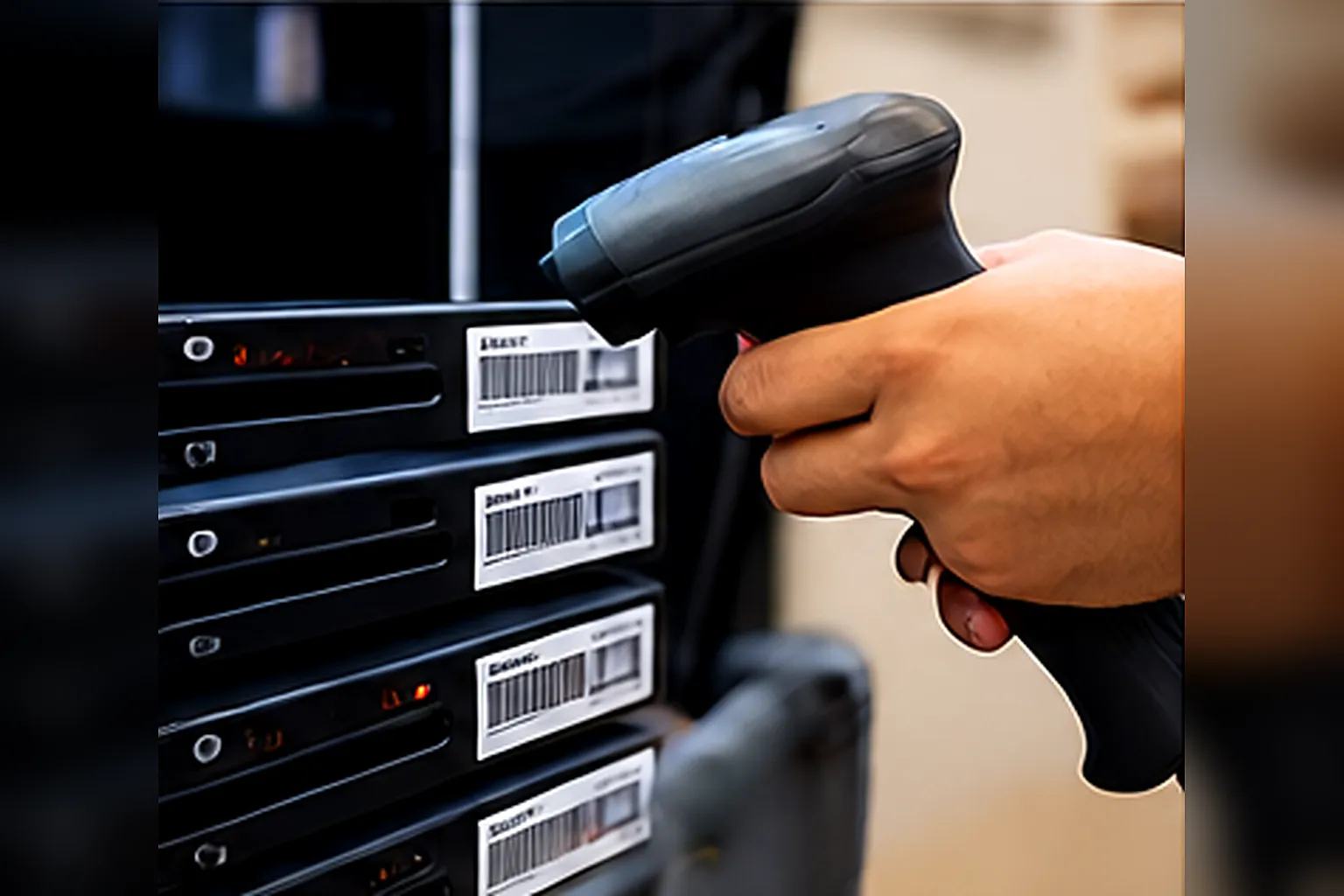
In ITAD, success means each former device has a known owner, a traceable location, an approved data decision and evidence of its final disposition. One misplaced laptop or undocumented drive matters more than an inaccurate collection count.
Devices come back from home offices, satellite sites and a central store.
A laptop’s condition says nothing about the data still on it.
Worn labels, earlier repairs and devices returned via another office.
02 / Delivery model
Five stages. From return request to final disposition.
Each phase is summarized below. Open any step for the underlying delivery detail.
- 01
Plan the retirement register
List every expected device with tag, serial, custodian, address, accessories and storage.
Read technical detail +−
The team requests a documented data-handling policy and who can approve exceptions. Packaging guidance, shipping controls, tracking and the definition of a completed handover are agreed before employees receive simple return instructions.
- 02
Collection without losing custody
Use uniquely referenced shipments and a collection log, not a pile of courier boxes.
Read technical detail +−
On arrival, staff record the shipment reference, inspect for tampering, check the item against the return record and place it in controlled holding. A courier confirmation alone does not prove the expected laptop was inside; mismatches and damage are recorded before a case closes.
- 03
Receiving & reconciliation
Match real devices to the register and keep clear states instead of a “perfect” count.
Read technical detail +−
A first sample batch confirms that identifiers are good enough to match. Unmatched devices go to an exception category under controlled storage. Each asset carries a state: expected, in transit, received, disputed, authorized for processing or finalised.
- 04
Data-bearing media decision
The client’s security team decides sanitization, destruction or retention for each medium.
Read technical detail +−
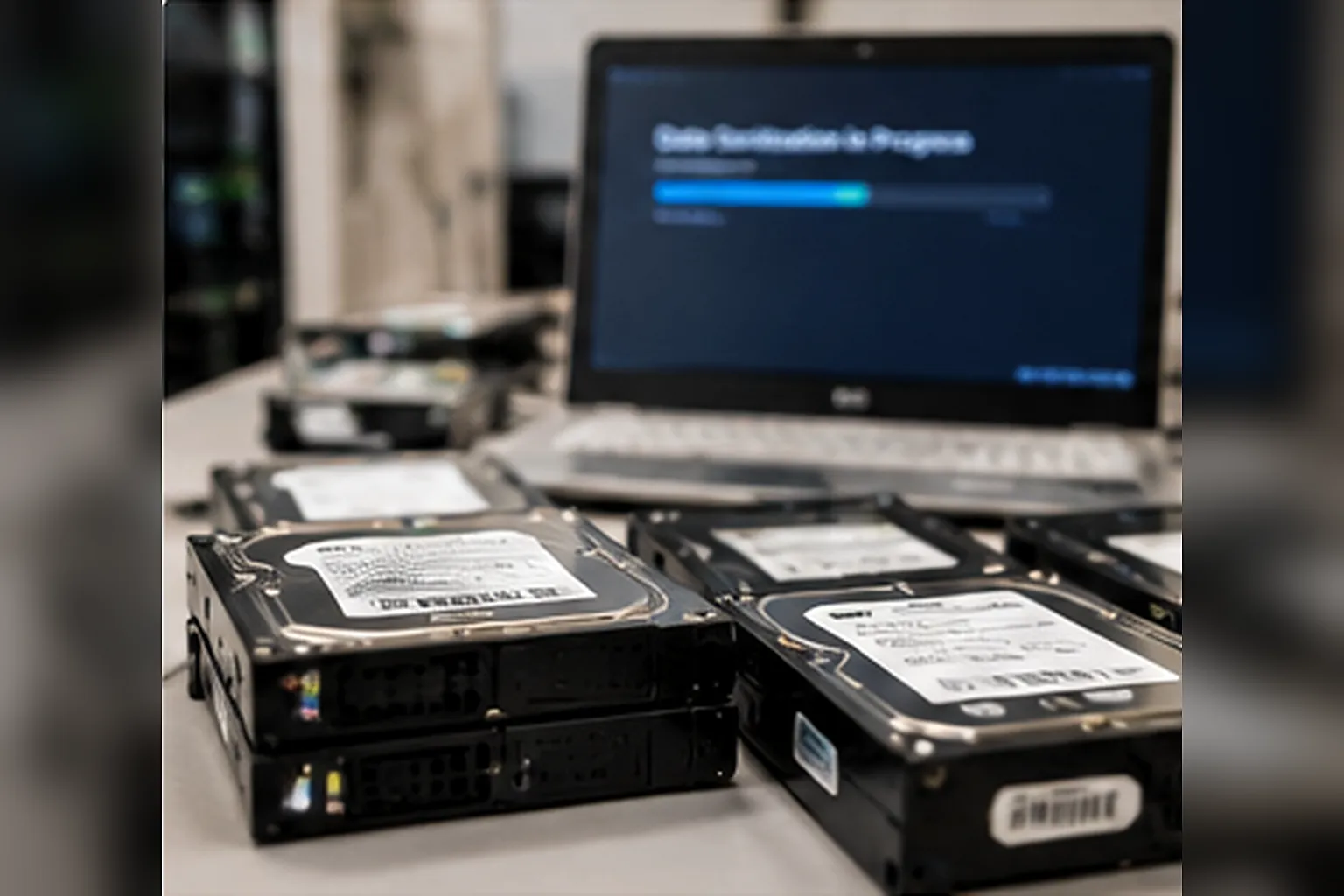
A drive that cannot be reliably sanitized under the approved procedure never receives a sanitization certificate, and ordinary file deletion is no substitute. The authorized specialist records method, tool output or destruction evidence, device identifier, result and reviewer.
- 05
Onward disposition
Route each verified asset to reuse, resale, recycling or destruction—and record it.
Read technical detail +−
Functional units approved for reuse can be graded; others go to a vetted recycling or destruction partner. Batteries and cross-border shipments may need specialists. Nothing is called “recycled” or “destroyed” before a reliable downstream record exists.
03 / Roles & responsibilities
The MSP coordinates. The client decides. Specialists process.
In the illustrative model, the client keeps data-classification and reuse decisions, the MSP runs the operation, and qualified processors perform work that needs their tooling or permissions.
Data classification · sanitization or destruction rules · reuse and resale decisions · exception approval
Return logistics · receiving and custody · reconciliation · specialist hand-offs · disposition register
What if a laptop holds a drive that is not on the list?
The receiving technician notes the extra storage module and moves the device to a controlled exception queue. The security owner gives a disposition instruction that explicitly covers the new medium; its identity is linked to the parent device and the final pack carries evidence for both.
04 / Closeout evidence
An asset-by-asset disposition package.
A proposed closeout would reconcile the 240 expected records against what actually returned, with evidence mapped to each device rather than a generic batch statement. These are example deliverables, not certified outcomes.
05 / What buyers should know
Retirement is information security, not just logistics.
Device retirement combines logistics with data protection, contracts, inventory accuracy and downstream accountability. Making every handoff explicit and every final claim evidence-backed protects the MSP’s customer relationship.
What to ask an ITAD provider
Where collection and processing happen, how data-bearing items are identified, which sanitization or destruction options are supported, who performs each task, how chain of custody is documented, what downstream recycling evidence exists and how loss or mismatch cases are escalated.
What if a device never arrives?
The team preserves the tracking record and signed handoff and notifies the asset owner; the client’s loss procedure governs what happens next. The device stays visibly unresolved until it is recovered or an approved loss outcome is documented—never “closed” to hit a target.
Read the complete case studyFull narrative · for readers who want every detail
A fictional regional technology company is replacing an aging fleet of employee laptops used by hybrid and fully remote teams. The new devices are already in service, but the old ones are scattered across home offices, small satellite locations and a central IT store. The company’s MSP is responsible for collecting the returned equipment and establishing a defensible retirement record. This illustrative IT Asset Disposition (ITAD) scenario considers a batch of 240 laptops, some with removable storage and accessories. It follows what happens after equipment stops being used—not a rollout, relocation or active-user setup. The client and all figures are fictional; the narrative demonstrates an approach rather than DacoreIT’s completed work.
A different problem from device deployment
During an installation or IMAC assignment, success means a user can start productive work with a correctly configured device. In ITAD, success means the former device has a known owner, a traceable physical location, an approved decision about its data, and evidence of its final disposition. The technician is not building a new desk or enabling an employee account. Instead, the team is reducing uncertainty about property that may still contain sensitive corporate information. One misplaced laptop or undocumented drive is more consequential than an inaccurate collection count. The central question for this project is not whether all 240 boxes reached a warehouse; it is whether each data-bearing asset can be accounted for from return request through final authorized outcome.
Customer brief and boundaries
The fictional client wants the MSP to coordinate returns from distributed employees, receive and reconcile devices, segregate storage media, arrange approved sanitization or physical destruction through qualified parties as required, and provide a final asset-level reconciliation. The client retains ownership of data-classification rules, decisions about resale or reuse, and authorization for destruction. The MSP acts as the operational coordinator, with a specialist downstream service provider involved where the procedure requires tooling, facilities or permissions the collection team does not possess. This example does not assume DacoreIT holds any particular certification, directly operates a destruction facility, or guarantees an outcome before the actual delivery chain is assessed.
Planning the retirement programme
The starting point is a retirement register drawn from the client’s current inventory. For each expected laptop, the register should distinguish company asset tag, device serial number, assigned custodian, return address, expected accessories and any separately recorded internal or removable storage devices. The team also requests a documented policy defining how data is to be handled and who can approve exceptions. Prior to sending return instructions, the coordinator agrees on packaging guidance, shipping controls, tracking and the definition of a completed handover. Remote workers should receive a simple communication that explains what to return, what not to send, how to protect the device during transit and whom to contact if labels or collection arrangements fail.
Collection without losing custody
In the fictional approach, the return programme uses uniquely referenced shipping instructions and a collection log, not an informal pile of courier boxes. When a package arrives at the authorized receiving point, staff record the shipment reference, inspect the exterior for tampering, check the visible item against the return record and place it in controlled holding until inventory is reconciled. A sealed parcel and a courier delivery confirmation alone do not establish that the expected laptop was inside. Staff document mismatches, missing parts and damaged devices before a case is closed. The custody trail identifies each transfer point, the receiving party and the next responsible handler without collecting unrelated employee personal information.
Receiving and inventory reconciliation
The receiving team processes the first sample batch to confirm that identifiers on actual devices are sufficient to match the client register. Some returned laptops may have worn labels or earlier hardware repairs; serial information should be verified using permitted markings and approved methods. Devices that cannot be matched are placed in an exception category and remain under controlled storage. The team also records visible accessories separately from data-bearing components. This phase can reveal that the apparent volume of 240 devices differs from the number physically received, or that a specific serial was already returned through another office. Rather than manufacturing a perfect count, the coordinator maintains distinct states: expected, in transit, received, disputed, authorized for processing, and finalised.
Data-bearing media: the critical decision point
Storage deserves its own workflow because a laptop’s apparent condition tells little about its data risk. The client’s security team defines whether each eligible device or drive requires a documented sanitization method, physical destruction or secure retention. That decision may depend on media type, encryption state, corporate policy, planned reuse and applicable obligations. A disk that cannot be reliably sanitized under the approved procedure must not be given a successful sanitization certificate. Similarly, disabling an account or performing an ordinary file deletion is not a substitute for a validated data disposition process. The authorized specialist records the method used, tool output or destruction evidence where appropriate, device identifier, result and reviewer. Actual standards and certifications, if relevant, must be established contractually, never presumed by marketing copy.
Sorting the onward disposition routes
Once data handling has been authorized and verified, equipment follows a clearly recorded pathway. Functional devices approved for remarketing or internal reuse can be evaluated and graded; unusable or unapproved units can be directed to a vetted recycling or destruction partner according to the client’s decision. Battery handling, hazardous components and cross-border shipments may impose additional constraints and require specialized providers. The tracking system should not call an asset “recycled” merely because it left the collection location, nor describe a shipment as “securely destroyed” before a reliable downstream record exists. The MSP’s account manager should be able to explain the disposition status of each individual asset, including items in quarantine or still awaiting documentation.
Exception example: a drive that is not on the list
Imagine that a returned laptop has an additional removable storage module that is absent from the client’s original register. The receiving technician notes the extra component and places the device in a controlled exception queue. The coordinator informs the security owner and requests a disposition instruction that explicitly covers the newly discovered medium. No assumption is made that the existing device certificate automatically covers every embedded or removable drive. If the module requires a separate treatment, its identity is associated with the parent device record and the final package contains evidence for both. The extra paperwork is not a failure of the programme. It is an example of a control functioning precisely because the actual return did not match the expected inventory.
Exception example: a device never arrives
A second fictional exception involves a laptop shown as collected by a courier but not present in the receiving inventory. The team immediately preserves the tracking record, checks the signed handoff and the receiving exception log, and notifies the designated asset owner. The next action is governed by the client’s loss and incident procedure, not a general field engineer’s discretion. The device must remain visibly unresolved until a confirmed recovery or an appropriately approved loss outcome is documented. That distinction matters when reporting to security and finance teams: a returned, sanitized asset and a missing asset should never appear under the same reassuring “closed” status simply to reach a numerical completion target.
What the customer would receive
The most useful end product is an asset-by-asset disposition package. For this fictional programme, that would include a reconciliation between the 240 expected laptop records and what was actually returned; shipment and custody references; approved sanitization or destruction evidence for each relevant device or storage medium; a register of items approved for reuse, resale or downstream recycling; and a clearly owned list of open exceptions. The summary should distinguish tasks performed by the MSP’s coordination team from tasks carried out by any specialist processor. Certificates and data reports must map to the correct device or medium rather than being issued as generic batch assertions that cannot be audited.
Outcome
In this scenario, the client ends with a controlled record of equipment retirement instead of a warehouse total with uncertain data status. Staff can distinguish assets already processed from those awaiting decisions, missing from a shipment or assigned to a downstream vendor. Security can review the evidence relevant to its own policy; procurement and finance can use the disposition register for asset-accounting decisions. These are illustrative deliverables, not confirmed DacoreIT outcomes, measured reduction in incidents, documented environmental savings, or proof of certification. A real published case study would require permission to cite the customer’s programme data and access to audit-ready supporting records.
What procurement and IT leaders should ask
A buyer evaluating ITAD should ask where collection and processing will occur, how data-bearing items are identified, which sanitization or destruction choices are supported, who is authorized to perform each task, how chain of custody is documented, what downstream recycling evidence can be produced, and how loss or mismatch cases are escalated. The proposal should distinguish return logistics from secure data handling and from the final resale or recycling route. A buyer should also ask who owns the data and assets until legally effective transfer occurs. These questions are more meaningful than a generic promise to “take away old laptops,” especially when remote employees and sensitive devices are involved.
Why this matters for an MSP partner
An MSP that coordinates device retirement may already manage the client’s active endpoints, but retirement introduces a different risk profile. It combines logistics with information security, contractual responsibility, inventory accuracy and downstream accountability. A repeatable ITAD service model protects the MSP’s customer relationship by making every handoff explicit and every final claim evidence-backed. Done carefully, retirement records become useful commercial documentation rather than an afterthought. This example shows a process for handling that responsibility while remaining transparent that the example is fictional. It does not suggest that any particular method or geographic footprint is available until DacoreIT Operations confirms the proposed scope.